

A dietitian breaks down the benefits, nutrition facts, and how it compares to regular milk, so you can decide if it deserves a spot in your fridge.

Ever seen “ultra-filtered milk” on a label and wondered what that even means?
I’ve seen it show up more and more lately in protein shakes, yogurts, and brands like Fairlife. I’ve also seen a lot of inaccurate social media videos floating around about what ultra-filtered milk is. It promises more protein, less sugar, and often claims to be easier to digest.
But is it actually a better choice than regular milk?
Instead of relying on shirtless men in the grocery store to influence your decisions, let me (a registered dietitian with over a decade of experience in the health and wellness space) break it down and see if ultra-filtered milk is worth adding to your grocery cart.
What is ultra-filtered milk?
To create ultra-filtered milk, regular dairy milk is passed through a special, semi-permeable membrane that separates the natural components of milk, including water, lactose (milk sugar), protein, and minerals. Water, lactose, and low-molecular-weight molecules are filtered out so that more protein and higher molecular weight compounds are left behind.
The goal of this processing is to create a milk product that’s rich and creamy with a nutrient profile that’s high in protein and low in lactose.
Many ultra-filtered milk products go the extra step to make their product lactose-free by adding a lactase enzyme (the enzyme that people with lactose intolerance don’t have enough of).
How is it different from regular milk?
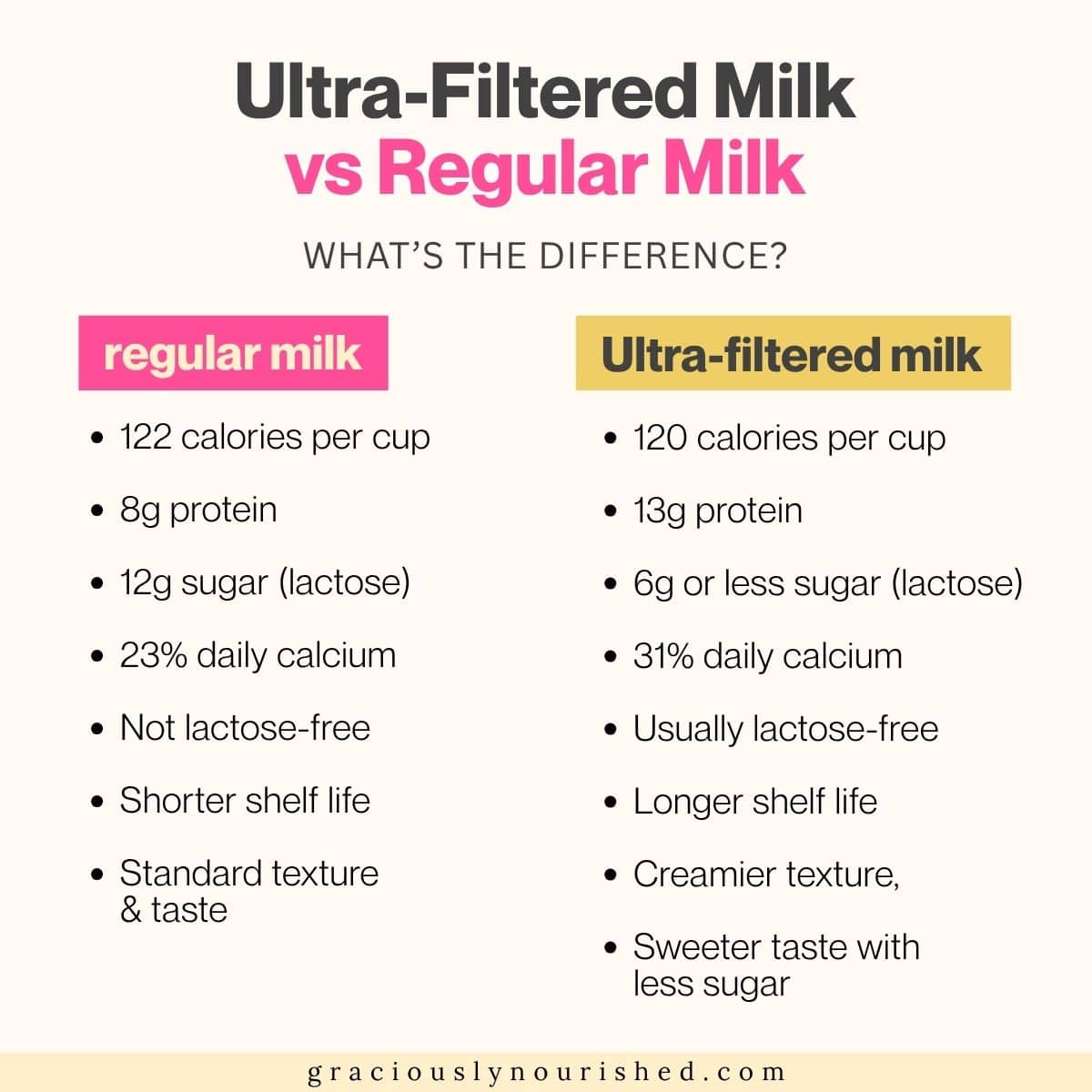
Here’s a quick side-by-side to show how ultra-filtered milk compares to regular milk:
| Nutrient (per 1 cup) | Regular Milk (2%) | Ultra-Filtered Milk (2%) |
| Calories | 122 | 120 |
| Protein | 8g | 13g |
| Sugar (lactose) | 12g | 6g or less |
| Calcium | 23% DV | 31% DV |
| Lactose-free | No | Usually yes |
Key differences:
- More protein: Ultra-filtered milk has nearly double the protein of regular milk, which helps with satiety, muscle repair and growth, and immune health.
- Less sugar: Lower in lactose and total sugar, which may be helpful for blood sugar balance.
- Lactose-free: Easier to digest for people with lactose intolerance.
- Shelf life: Thanks to the filtration and pasteurization process, ultra-filtered milk usually lasts longer in the fridge (a big win for busy families).
In terms of taste and texture, most people find ultra-filtered milk to be a bit creamier and slightly sweeter than regular milk, even if you’re drinking a lower-fat variety. This is because the filtration process increases the concentration of milk solids, and the lactose is prebroken down, creating a sweeter taste with less sugar.
I personally don’t enjoy skim milk, but I often buy skim ultra-filtered milk since the texture seems more like a 2% regular milk than skim.
Nutrition benefits of ultra-filtered milk
Many high-protein yogurts and shakes use ultra-filtered milk to increase the protein content without having to rely on outside protein sources. These are some of the benefits you’ll get from drinking ultra-filtered milk:
- More protein: One cup of ultra-filtered milk has 13 grams of protein. Research shows that high-protein diets increase satiety and prevent muscle loss, which supports a higher metabolism and strength.
- Improved blood sugar management: The combination of lower sugar and higher protein supports slower digestion, improved insulin sensitivity, and glucose uptake by cells.
- Easier on the stomach: If regular milk upsets your stomach, ultra-filtered milk could be a gentler option thanks to the lower levels of lactose.
- High in calcium and vitamin D: These nutrients are essential for bone health and immune support, and ultra-filtered milk typically provides 30% or more of your daily calcium needs in just one cup.
Is ultra-filtered milk healthy?
It can be! Ultra-filtered milk is a more nutrient-dense option than regular milk, which can make it a better choice if you’re looking to increase protein or reduce sugar.
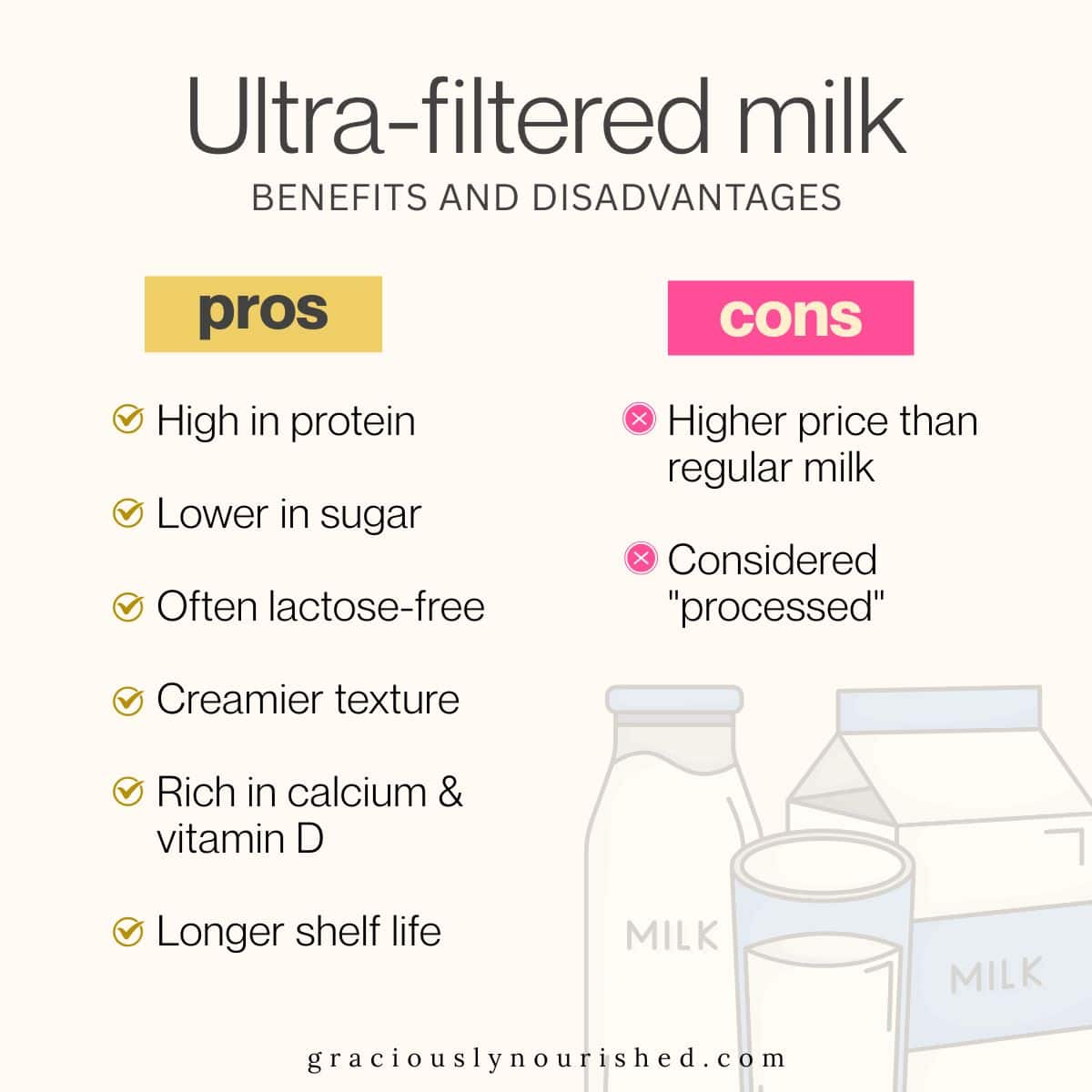
Here’s a quick look at the pros and cons:
Pros:
- High in protein
- Lower in sugar
- Often lactose-free
- Creamier, which may allow you to drink lower-fat and calorie varieties and still be satisfied
- It’s a great source of calcium and vitamin D
- Long shelf life, which equals fewer wasteful trips to the store
Possible cons:
- Price: It’s usually more expensive than regular milk.
- Processed concerns: People love to target the fact that ultra-filtered milk is processed. While it is technically processed, it’s not necessarily a bad thing. Pasteurization and filtration of milk can improve the safety and shelf-life of milk, both of which are major positives for our food system.
The filtration simply changes the milk’s structure; it doesn’t add any extra ingredients. If you drink almond or oat milk, those are often more heavily processed than ultra-filtered dairy.
And of course, what’s “healthy” depends on your body and your needs. If regular dairy works for you, fits your goals, and your budget, there’s no need to switch. But if you’re looking for something lower in sugar, higher in protein, or lower in lactose, ultra-filtered milk could be worth it.
Who might benefit from ultra-filtered milk?
- People with lactose intolerance: Since it’s typically lactose-free, it’s a gentle option for sensitive stomachs.
- Busy moms or adults trying to get more protein: It’s an easy way to sneak in extra protein without changing anything else.
- Kids or teens with high nutrient needs: That added calcium and protein can help growing bodies thrive.
- Anyone looking for a blood sugar-friendly option: Lower sugar and higher protein can benefit people with diabetes by slowing digestion and providing less of a rise in blood sugar.
How to use ultra-filtered milk in everyday life
Ultra-filtered milk works just like regular milk, but gives your meals and snacks a little extra nutrition boost. Here are some easy ways to use it:
- In smoothies and protein shakes
- For overnight oats or cereal
- As a creamer for a higher protein coffee
- In baking, like pancakes or muffins
- Poured into a glass and enjoyed on its own
Final thoughts from a dietitian
Ultra-filtered milk can be a nutritious, convenient option, especially if you’re looking for more protein, fewer sugars, or need a lactose-free choice. It’s not a “must-have” for everyone, but it’s a solid addition to a balanced diet if it fits your lifestyle and budget.
As always, it’s about the big picture. Whether you’re drinking regular milk, ultra-filtered, or skipping dairy altogether, the most important thing is finding what works for you.
If ultra-filtered milk makes your life easier or your meals more satisfying, it’s a great option to keep in your fridge.




Richard Russell says
I've been using Fair Life for several years. Mostly because of the longer life. As soon as I break the seal, I mark the date, so I know how long it's been open. I think that the taste is great. I've been seeing / reading stories that Ultra Filtered Milk is a code name for a lab grown product. Any Comment?
Kelsey Kunik, RDN says
Ultra-filtered is just referring to the processing. It's regular milk that undergoes an extra step (filtering) to remove more of the whey liquid out, leaving behind a creamier, thicker, higher protein milk with less lactose (as it's been filtered out). So, it's more processed than traditional milk, and while more processing can indicate a product is higher in sodium, salt, or has extra nutrients removed, in this case the things that are removed actually make it better for some people (like those who can't tolerate lactose).
Heather says
“Shirtless men in a grocery store”? Am I missing something?
Kelsey Kunik, RDN says
We must have different algorithms.. my Instagram is full of them lol!
Anne says
This is a helpful discussion on milks. Are the ultra filtered higher protein individual milks such has Fairlife’s high protein and Nurri shakes have similar pros and cons?
Kelsey Kunik, RDN says
Fairlife milk and other ultra filtered milks are included in these pros and cons. The shakes made with ultra filtered milk may have different sweeteners or additives that could adjust the pros and cons though, or make them better or worst for some people.
Beeble says
Did you ever ask Fairlife about their nice packaging? They've quit answering that question, but not that long ago, they said the nice white coating on the inside of their bottle is a combination of plastic #1 (which is safe) and plastic #7 (which can include safe and also very toxic chemicals). Of course, that was the lady at the front desk, who allowed me to send an email message to the person in charge of those decisions, and a week later when I followed up, they were no longer answering those questions. I quit buying that milk. I think toxic chemicals in my milk trumps lactose in my milk. Food for thought.
Kelsey Kunik, RDN says
Interesting! I haven't looked into the packaging.