

Clif bars are marketed as a wholesome, “natural” energy bar in flavors like chocolate chip, crunchy peanut butter, and white chocolate macadamia. With packaging that makes them look sporty and nutritious, Clif Bars might seem like the perfect on-the-go snack. But are Clif Bars really healthy, or are they just a candy bar in disguise?
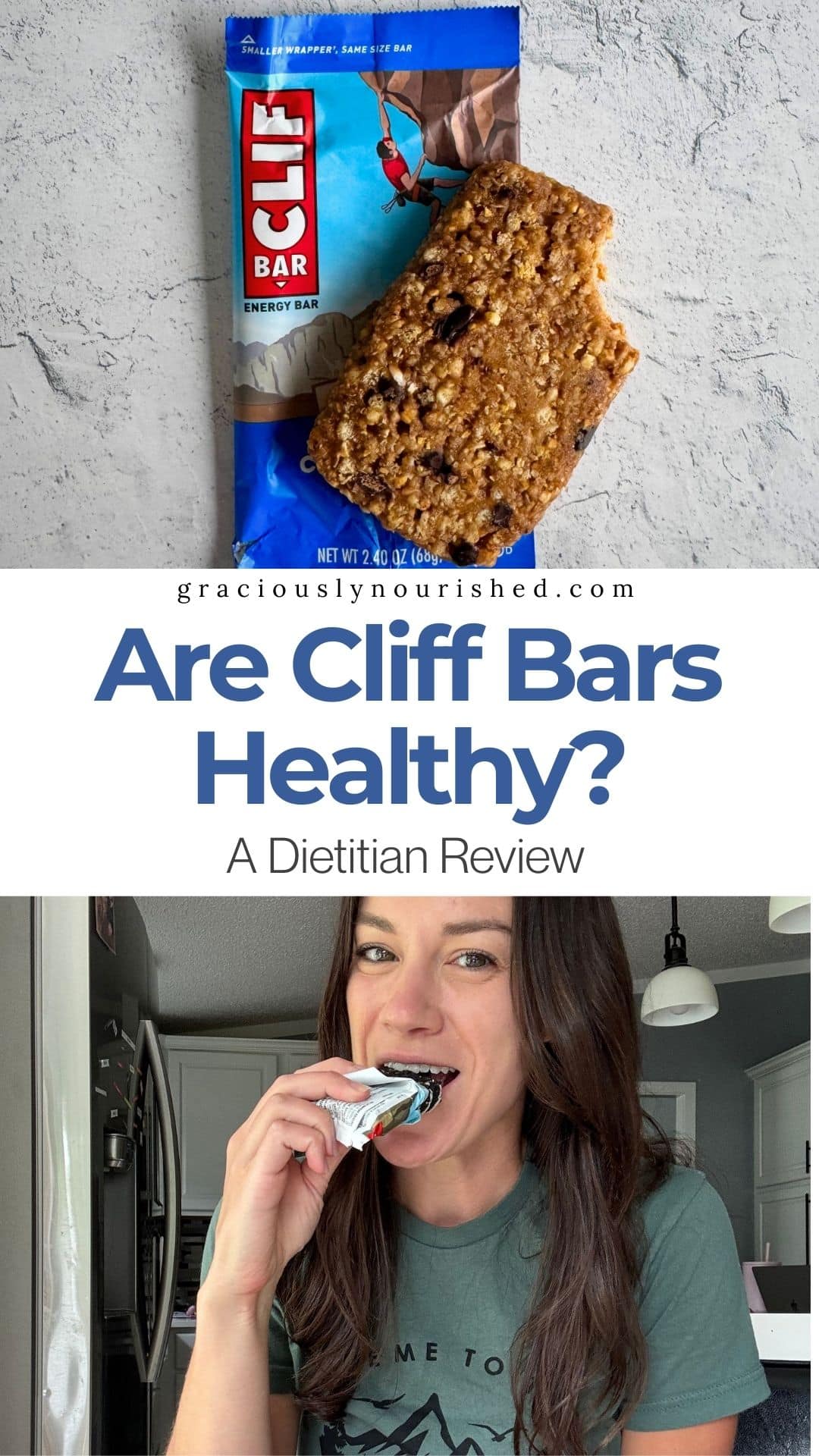
As a dietitian, I know how confusing bars like these can be. The label claims organic and non-GMO ingredients, oats, and protein, accompanied by a picture of a man rock climbing: basically a picture of health, right?!
And while Clif bars really may be a great choice for some people, some of the time, they may not be the healthiest option for everyone.
Just like I did with Kind bars, Quest bars, and Fiber One bars, we’re going to take a closer look at Clif Bars, down to the nutrition facts, ingredients, benefits, potential downsides, and how to enjoy them as part of a balanced diet.
This post may contain affiliate links, which means I may receive a small commission if you click and purchase from the link (at no cost to you!). See full privacy policy, disclosure, and affiliate information here.
Nutrition facts
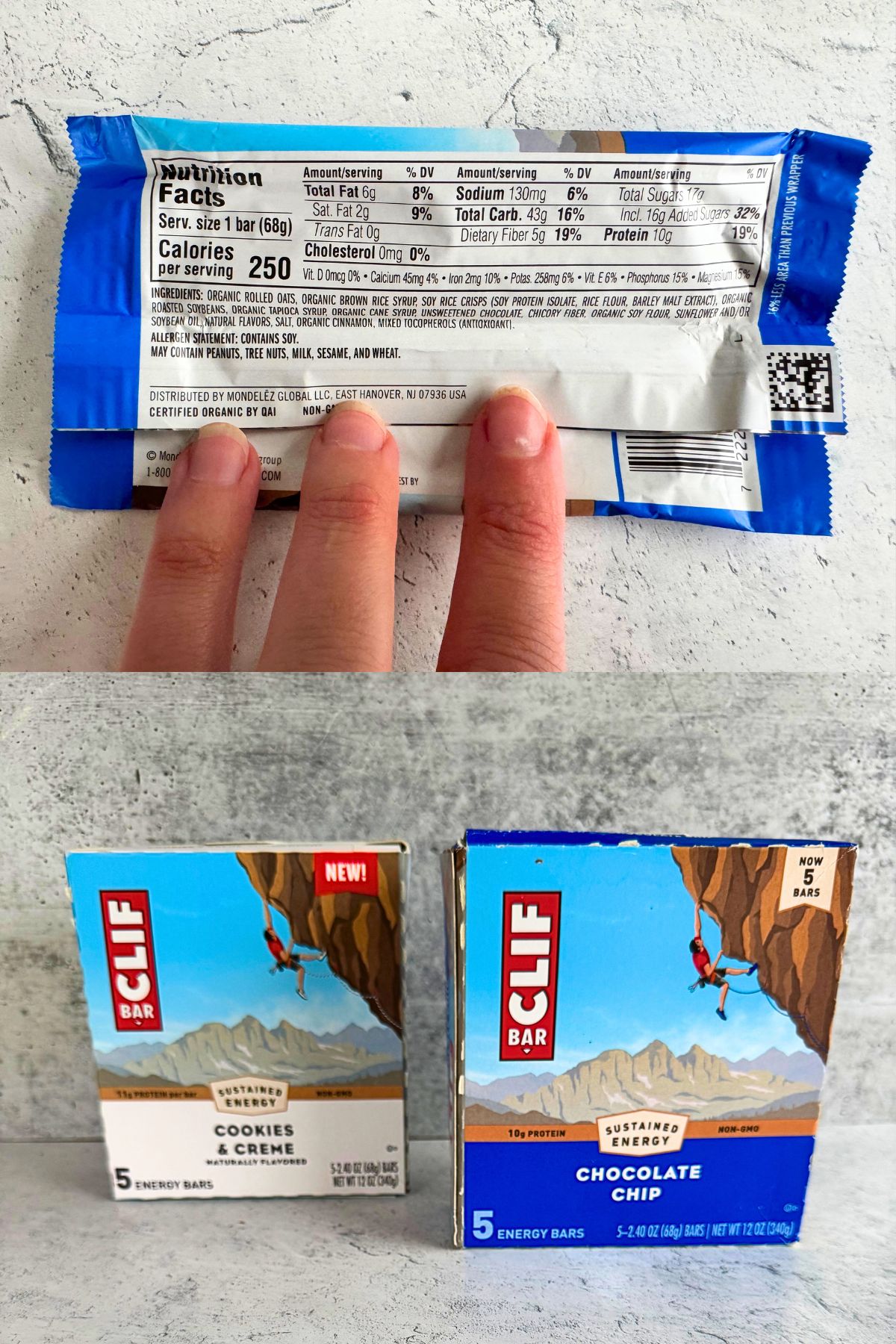
Here are the nutrition facts for one chocolate chip Clif Bar (68 grams):
- Calories: 250
- Protein: 10 g
- Fat: 6 g
- Carbohydrates: 43 g
- Fiber: 5 g
- Sugar: 17 g
- Added sugars: 16 g
The nutrition facts will vary depending on the flavor, but in general, Clif bars have between 250 and 260 calories, between 9 and 11 grams of protein, 5 to 6 grams of fiber, and 14 to 16 grams of added sugars.
Ingredients
Let’s take a look at what’s actually inside a Clif bar. While the ingredients will vary slightly with the flavors, here’s what you’ll typically find in the ingredient list:
Organic rolled oats
The top ingredient in Clif bars is rolled oats, which is a highly nutritious food. Oats are a whole grain rich in numerous beneficial nutrients that help prevent atherosclerosis and certain types of cancer, including colorectal cancer. One of the stand-out nutrients in oats is beta-glucan, a type of fiber that helps reduce blood cholesterol and blood sugar levels.
Organic brown rice syrup
Brown rice syrup is a type of added sugar that’s used to sweeten Clif bars and add extra carbohydrates to support endurance activities. While it’s different from high fructose corn syrup and table sugar, brown rice syrup has a glycemic index of 98, which is high and will likely cause a rapid spike in blood sugar. This is a good thing when you’re on a hike and need a boost of energy, but not a great thing if you’re sitting at your desk or lounging on the couch.
Soy rice crisps
This is where a bulk of the protein in a Clif bar comes from. Soy, a plant-based protein, is combined with milled rice to form a textured protein product that adds nutritional value and texture to these bars.
Organic roasted soybeans
Aside from being a plant-based protein, soy is rich in plant compounds that support heart health, may ease perimenopause symptoms for women, support cognitive health, and bone health, according to a recent review in the Journal of Agriculture and Food Research. The one downside to so much soy being used in Clif bars is that anyone with an allergy or sensitivity will have to avoid them.
Organic tapioca syrup and cane syrup
These ingredients help improve texture and sweetness, but they also increase the added sugars in Clif bars. Again, this isn’t a bad thing if you’re using them to fuel a workout, but it may not be a good option for a sedentary snack.
Chicory fiber
While some of the five to six grams of fiber in Clif bars come from oats, most of it is from the addition of chicory fiber. Chicory roots are rich in inulin, a prebiotic fiber that helps feed bacteria in the colon and supports a healthy gut microbiome.
Sunflower/soybean oil
For a fat source, Clif bars use either sunflower or soybean oil, or both. These two oils have very similar fat compositions, consisting mostly of monounsaturated fats, then polyunsaturated fats, and a small amount of saturated fats.
Natural flavors and other additives
Depending on the flavor of the Clif bar you eat, you’ll find natural flavors (any flavor substance derived from a plant or animal source) and other additions like chocolate, dried fruit, peanut butter, honey, or other additives.
Health benefits
Let’s look at the good stuff first, because, while there are some downsides we’ll point out, there are quite a few benefits you may notice from eating Clif bars.
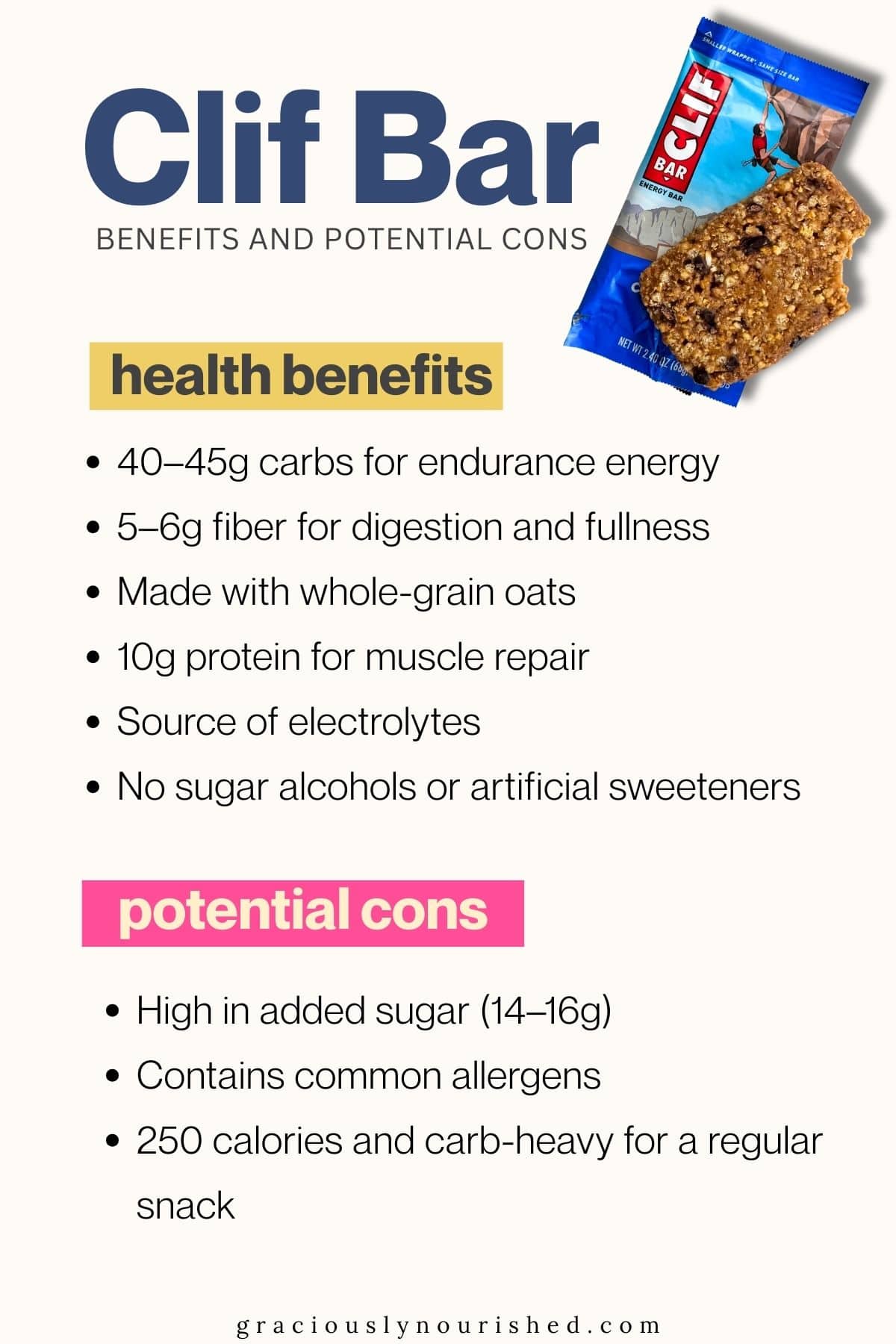
- They can help energize endurance activities: Clif Bars are designed as fuel for endurance activities and athletes. With 40–45 grams of carbs per bar, they act as a quick and steady energy source for long workouts, hikes, or bike rides. The mix of simple sugars and complex carbs makes them great for keeping your energy up over time.
- They’re high in fiber: Most Clif bars have between 5 and 6 grams of fiber to support digestion, slow down the release of energy, and help you feel fuller compared to lower-fiber bars. One bar has over 15 percent of your daily fiber needs.
- They’re a source of whole grains: Rolled oats make up a bulk of the carbohydrates in Clif bars, and are a rich source of whole grains. Using whole grains instead of refined grains adds the benefit of fiber, vitamins, minerals, and plant compounds that support overall health.
- They pack 10 grams of protein: While Clif bars aren’t necessarily protein bars, they do provide around 10 grams in each bar, helping with muscle repair and even energy release.
- They’re a source of electrolytes: You’ll find a decent amount of electrolytes in Clif bars, from sodium, potassium, magnesium, and calcium, which can help replace small amounts that may be lost in sweat. Even so, you’ll want to replace electrolytes with a more potent source (along with fluids) if sweating for long periods of time.
- No sugar alcohols or artificial sugars: This is a big plus for anyone who has digestive sensitivities to sugar alcohols. Since the goal is energy, Clif bars avoid artificial or non-nutritive sweeteners and use energy-giving sugars instead.
Potential cons
Here are some of the reasons you may want to think twice about eating Clif bars, or may want to reserve them for special circumstances:
- They’re high in added sugars: Most bars contain 14 and 16 grams of added sugar, which is over a quarter of the recommended daily limit. While this sugar can be useful for quick energy during workouts and endurance activities, it’s more than most people need for a desk snack or afternoon pick-me-up.
- They contain several allergens: Clif Bars are made with soy, and some flavors also feature nuts and dairy. Each bar has an allergen statement that it could also contain tree nuts, sesame, and wheat, which could be a big drawback if you have food allergies or sensitivities.
- They may be too calorie-dense and unbalanced for an everyday snack: Each bar has 250 calories and is disproportionately high in carbs. This is great for providing energy during long bouts of activity, but may not be the right balance for an everyday snack.
Clif bar vs a candy bar
Clif bars are often compared to a candy bar, but let’s see if that’s really true. We’re looking at the nutrition facts of a chocolate chip Clif bar vs a single serving Snickers bar:
| Clif Bar (2.40 oz) | Snickers Bar (1.68 oz) | |
| Calories | 250 | 250 |
| Protein | 10 g | 4 g |
| Fat | 6 g | 12 g |
| Saturated fat | 2 g | 4.5 g |
| Carbohydrates | 43 g | 32 g |
| Fiber | 5 g | 1 g |
| Added Sugar | 16 g | 26 g |
Calorie for calorie, Clif bars have more than double the protein, 5 times the amount of fiber, half the fat, and 10 grams fewer added sugars than a Snickers bar. They have more carbohydrates, but for a bar that’s meant to provide sustained energy during endurance activities, that’s a positive feature.
So while Clif bars do have more added sugars than some other protein bars, they’re objectively much healthier than a candy bar.
What about the taste?
Clif bars have been around since 1992, and I’ve had my fair share of them over the years. They’re not in my usual rotation these days, as I rarely need an on-the-go solution for endurance activities.
So to remind myself of the Clif Bar experience, I purchased and taste-tested the chocolate chip cookie flavor and the new cookies and cream flavor (I’m a sucker for anything cookies and cream!).
While the flavor of both is good and the texture is soft, I preferred the cookies and cream over the chocolate chip. The chocolate chip flavor tasted overly sweet to me, while the cookies and cream had a good flavor and a slight bitterness from the chocolate that helped balance out the sugars.
Clif bars are soft and easy to chew without the intensely chewy or chalky texture you’ll get in some protein bars.
How to include Clif bars in a balanced diet
Clif Bars can absolutely have a place in a healthy eating pattern—it just depends on when and how you enjoy them. Since they’re higher in carbs and sugars, they make the most sense in situations where your body actually needs quick energy, like:
- Before or during exercise: Eating a Clif Bar 30 to 60 minutes before a workout (or mid-way through a long hike or bike ride) can give you a much-needed energy boost in a convenient package.
- On busy, active days: If you’re running around and don’t have time for a full meal, a Clif Bar can bridge the gap until you sit down to eat. Pairing it with something higher in protein or fat, like a string cheese, a handful of nuts, or even a latte, can make it more balanced and satisfying as a meal replacement option.
- Choose flavors you enjoy: Since the nutrition facts don’t vary much between flavors, pick the ones that actually satisfy you. Enjoying the flavor you like most makes it easier to eat mindfully instead of feeling deprived.
- Be mindful of your goal: If you’re sitting at a desk all afternoon, you may find that a Clif Bar isn’t the best option, as its nutrient profile is best for times that require a lot of effort and energy. You may be better off choosing a more balanced snack bar option like a GoMacro Bar or Rx Bar.
The bottom line: Are Clif bars good for you?
Clif Bars are best used as an energy bar, not necessarily an everyday snack. While they’re higher in added sugars than many other bar options, that added sugar may be beneficial and needed if you’re on a long hike, bike ride, or other endurance activity that requires quick and sustained fuel.
While there are other whole food options you could choose, Clif bars are convenient and do the job for powering you through active days. If you need a convenient, widely available energy bar and love the taste, they can definitely fit into a balanced diet.


Todd Ryzow says
Hi,
I'm starting an energy bar business and would be interested in getting your feedback on the nutritional benefits. If you are interested, please email me.
With gratitude,